
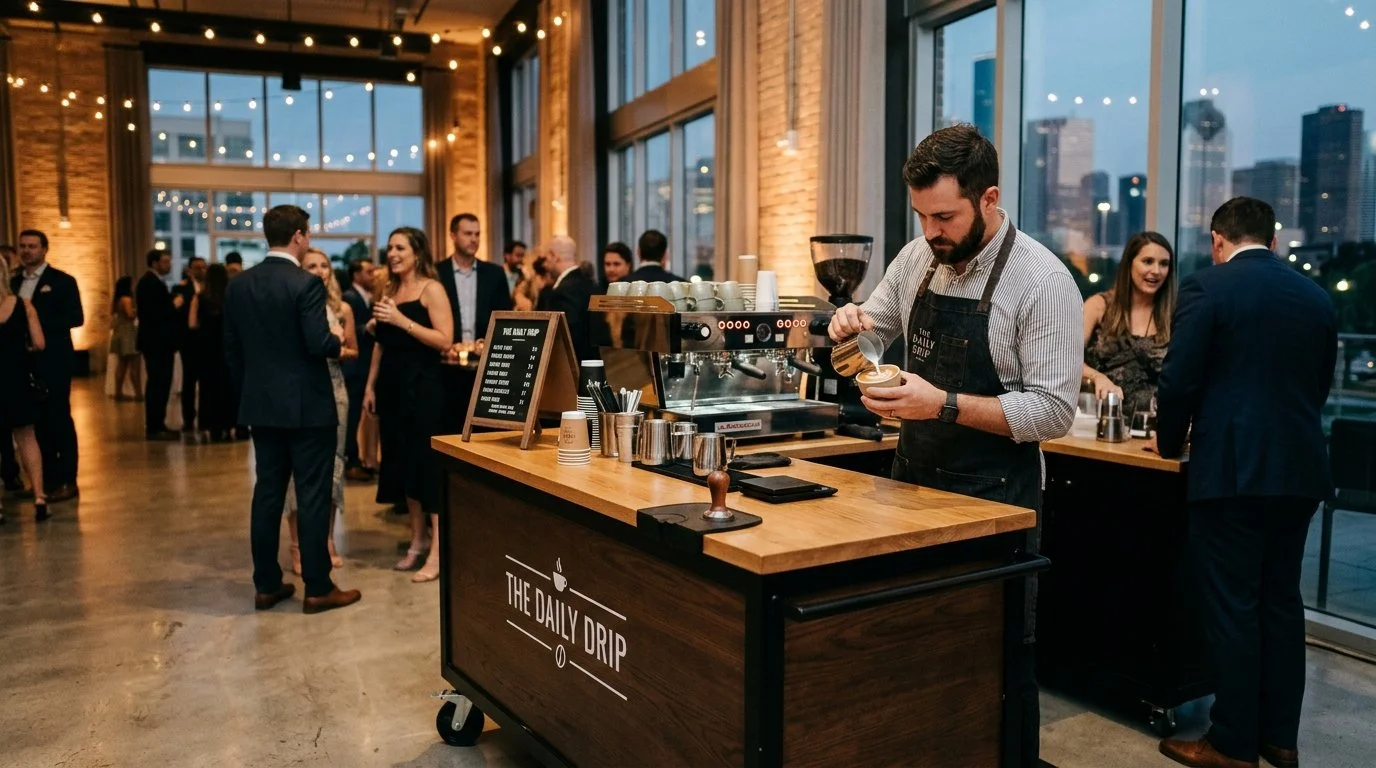
Signature specialty coffee drinks, craft cold brews, and seasonal menus.
Top Coffee Bar Trends for Houston Events: Seasonal Flavors, Cold Brew & Non-Dairy Menus
Event beverage culture in Greater Houston has evolved beyond generic catering options. Today's couples, corporate directors, and event coordinators demand experiential food and beverage offerings that match the sophistication of independent third-wave coffee shops.
From draft nitro cold brew poured from custom wooden taps to scratch-made botanical syrups and edible foam art, mobile coffee catering is redefining hospitality at modern receptions and corporate galas. This guide explores the leading beverage trends, seasonal recipe pairings, and operational considerations shaping Houston events in 2026.
The Direct Answer: Leading Coffee Catering Trends in Greater Houston
The most dominant trend in Houston event coffee catering is the shift toward chilled, flash-extracted, and draft cold brew beverages, which account for 60% to 70% of total drink orders between April and October.
Secondary major trends include:
House-Crafted Botanical Syrups: Moving away from commercial bottled syrups toward scratch-simmered reductions like Texas wildflower honey-lavender, smoked brown sugar vanilla, and roasted pecan praline.
Plant-Based Default Service: Treating certified barista oat milk as a core staple rather than an obscure request, serving between 35% and 50% of total attendees.
Interactive Visual Customization: Incorporating personalized edible dusting stencils, branded acrylic menu typography, and draft beverage systems directly on the cart.
Houston Coffee Catering Trend Adoption Matrix
Trend FormatGuest PopularityPeak Season WindowOperational RequirementDraft Cold Brew65% Total OrdersMay – OctoberDedicated draft systemBarista Oat Milk40% Drink VolumeYear-RoundHigh-protein oat blendArtisan Syrups80% Custom LattesFall & SpringScratch kitchen prepCeremonial Matcha15% Total OrdersSpring & SummerDedicated whisks & bowlCustom Stencil ArtHigh PhotographyYear-RoundLaser-cut acrylic stencils
These craft trends allow event organizers to offer a personalized coffee experience that rivals Houston's top artisanal roasteries.
The Third-Wave Specialty Coffee Revolution in Event Catering
To understand modern event beverage trends, one must examine the evolution of coffee consumption. Coffee has transitioned through three major cultural waves:
The First Wave: Commodity coffee focused on mass availability (canned pre-ground coffee, instant granules, automated hotel urns).
The Second Wave: Dark-roast espresso chains introducing Italian terminology and heavily sweetened syrups (the 1990s commercial café movement).
The Third Wave: Treating coffee as an artisanal agricultural craft, emphasizing origin transparency, light-to-medium roast profiles, microfoam texture, and culinary flavor pairing.
Event hosts no longer view coffee as an afterthought served only alongside wedding cake. Guests frequent third-wave cafés in Montrose, The Heights, and Downtown Houston. When attending an elevated celebration at The Astorian or an executive summit in the Galleria, they anticipate that same standard of specialty coffee craftsmanship.
Evolution of Event Beverage Catering
First Wave:Second Wave:Third Wave:Banquet DripCommercial DarkSpecialty CraftScalding UrnsHeavy SyrupsOrigin & Art
Houston's Climate Reality: The Dominance of Iced & Draft Cold Beverages
Climate dictates beverage consumption. In Houston, where temperatures frequently exceed 90°F with humidity above 75%, hot beverages lose appeal during afternoon celebrations.
1. The 65/35 Iced-to-Hot Consumption Shift
At an event held between late spring and early autumn, 65% to 75% of drink orders are iced. Even during winter months, Houston's mild temperatures mean that nearly half of attendees still request cold beverages.
Caterers who bring only small domestic ice buckets quickly run out of supplies. Professional mobile units like 10TEN Coffee Cart deploy high-capacity insulated ice storage, bringing between 40 and 80 pounds of food-grade ice per 100 expected guests.
2. Nitrogen-Infused Draft Cold Brew (Nitro Tap)
Cold brew steeped for 18 to 24 hours produces a sweet, low-acidity concentrate. When pushed through a draft faucet charged with pressurized nitrogen gas, the beverage undergoes a physical transformation:
Micro-Bubble Cascading: Nitrogen bubbles cascade downward through the glass, creating a rich visual display similar to a freshly poured stout.
Velvety Mouthfeel: Nitrogen micro-bubbles introduce a creamy mouthfeel without requiring added dairy, cream, or sugar.
Rapid Serving Velocity: A barista dispenses a pint of draft nitro cold brew in under eight seconds, clearing high-volume queues during twenty-minute conference breaks.
3. Flash-Chilled Shaken Espressos
Rather than pouring hot espresso over ice cubes (which melts the ice and dilutes extraction flavors), modern baristas prepare shaken iced beverages. Pulling a fresh double shot over ice in a Japanese cocktail shaker with craft syrup and shaking vigorously aerates the espresso, producing a chilled beverage with a thick, aromatic crema cap.
Seasonal Menu Architecture: Flavor Curations for Texas Celebrations
A static menu of vanilla and caramel no longer excites modern attendees. Designing seasonal beverage rosters aligned with seasonal harvest profiles adds culinary distinction to your event.
Seasonal Specialty Drink Formulations for Houston
SeasonDrink Concept & IngredientsFlavor Profile & AestheticSpring AwakeningCardamom Rose Latte & Oat MilkFloral, aromatic, pastelSummer HeatwaveSparkling Espresso Tonic & CitrusCrisp, effervescent, chilledTexas AutumnBrown Butter Pecan CortadoNutty, caramelized, richWinter HolidayMexican Spiced Mocha & CayenneWarming cocoa, cinnamon heat
Spring & Summer Formulations: Floral, Botanical & Crisp
Warm-weather menus celebrate refreshing, citrus-forward, and botanical ingredients that counteract humid Gulf Coast afternoons:
The Cardamom Rose Iced Latte: Single-origin espresso combined with house-simmered organic rose water reduction and freshly cracked green cardamom, topped with chilled oat milk and dried rose petal dust.
The Sparkling Espresso Tonic: Craft Indian tonic water poured over clear ice, topped with a freshly pulled float of citrusy Ethiopian espresso and a fresh grapefruit peel twist.
The Coconut Cream Cold Brew: 24-hour steeped cold brew crowned with hand-frothed coconut sweet cream, providing tropical creaminess without heavy dairy fats.
Fall & Winter Formulations: Spiced, Nutty & Caramelized
Autumn and winter weddings in Houston during the peak holiday event calendar call for cozy, aromatic flavor notes:
The Brown Butter Pecan Cortado: Equal parts rich espresso and textured steamed milk, sweetened with roasted Texas pecan butter and caramelized dark brown sugar.
The Smoked Bourbon Vanilla Latte: Madagascar bourbon vanilla beans slow-simmered with charred oak wood chips, creating a rich, smoky profile that pairs naturally with rustic ranch venues.
The Spiced Mexican Mocha: Guajillo chili-infused dark cocoa melted into double-shot espresso, finished with ground Ceylon cinnamon and micro-textured whole milk.
Expanding Dietary Inclusivity: High-Performance Plant Milks & Decaf
Today's event planners recognize that dietary inclusivity is essential hospitality. Serving sub-par alternatives alienates health-conscious or lactose-intolerant guests.
Alternative Milk Performance Evaluation
Milk CategoryChemical Composition & TextureBarista Steaming PerformanceBarista Oat MilkHigh beta-glucans, balanced fatDense microfoam & latte artAlmond Barista MilkLower protein, delicate nuttinessLight foam, crisp mouthfeelWhole Dairy Milk3.5% butterfat, native proteinsBenchmark microfoam densityCoconut MilkHigh medium-chain triglyceridesRich flavor, delicate foam
1. The Rise of Barista Oat Milk
Oat milk has emerged as the premier non-dairy choice in specialty coffee. Standard retail oat milks frequently curdle when introduced to hot, acidic espresso.
Specialty caterers utilize professional Barista-Edition Oat Milks formulated with dipotassium phosphate and natural emulsifiers:
Thermal Stability: Prevents curdling when poured into light-roast acidic espresso extractions.
Microfoam Density: Creates glossy, textured microfoam that enables baristas to pour intricate rosettas, swans, and heart latte art on non-dairy drinks.
Neutral Flavor Complement: Oat milk's subtle cereal sweetness balances espresso bitterness without overpowering delicate coffee tasting notes.
2. Quality Decaf via Chemical-Free Processing
Roughly 30% of wedding reception attendees and evening gala guests request decaffeinated beverages. Historical decaffeination methods utilized harsh chemical solvents (e.g., methylene chloride or ethyl acetate) that stripped away natural origin flavors.
Modern specialty caterers brew decaf processed via Swiss Water Process or Mountain Water Process:
Green coffee beans are soaked in pure water saturated with soluble coffee compounds, gently extracting 99.9% of caffeine molecules via osmosis.
Zero chemical solvents touch the beans.
The resulting espresso retains rich chocolate, stone fruit, and brown sugar notes, allowing decaf drinkers to enjoy full flavor without caffeine side effects, compliant with Specialty Coffee Association (SCA) quality protocols.
4. Technical Extraction Science: Flash Chilling vs. Traditional Cold Brew
Understanding how temperature influences chemical extraction helps hosts select the proper iced beverage format for their event:
The Cold Steeping Process: Immersion brewing at 38°F to 42°F over 18 to 24 hours extracts lipid and sugar compounds while leaving behind heat-soluble chlorogenic acids. This results in a heavy, chocolate-forward beverage with low perceived acidity, making it gentle on sensitive stomachs.
The Flash-Chilling Alternative: Brewing hot espresso or filter coffee directly over ice or through rapid counter-flow heat exchangers preserves delicate floral and volatile citrus aromatics that cold water cannot extract. For single-origin African beans (e.g., Ethiopian Yirgacheffe or Kenyan Nyeri), flash-chilling delivers bright raspberry, bergamot, and jasmine tasting notes that sparkle on hot summer afternoons.
Total Dissolved Solids (TDS) Measurement: Professional mobile baristas utilize optical digital refractometers to measure beverage concentration, targeting a balance between 1.25% and 1.45% TDS for iced filter coffee and 8.0% to 10.0% TDS for espresso bases in accordance with SCA sensory standards.
Regional Texas Botanical & Sourcing Integration
Houston hosts increasingly request menus that reflect regional agricultural roots. Sourcing components from independent Texas producers provides authenticity and conversational value:
Texas Sourcing & Culinary Botanical Pairings
Agricultural RegionSourced IngredientCulinary Beverage PairingHill CountryWildflower Honey & Raw LavenderFlat Whites & Iced LattesSan Saba CountyRoasted Texas Orchard PecansCortados & Brown Sugar MistsRio Grande ValleyRuby Red Grapefruit & Blood OrangeSparkling Espresso TonicsCentral TexasHand-Cut Smoked Oak Wood ChipsSmoked Bourbon Vanilla Syrups
1. Central Texas Hill Country Lavender and Honey
Culinary lavender harvested from Blanco and Fredericksburg offers floral notes without medicinal bitterness. Simmered into raw Texas wildflower honey, this syrup pairs with light-roast espresso to create a subtle, pastel-toned beverage popular at bridal showers and outdoor garden ceremonies.
2. San Saba Pecan Reductions
Known as the pecan capital of Texas, San Saba produces nuts with high natural oil contents. Lightly toasting crushed pecans before simmering with organic turbinado sugar yields a rich praline syrup that enhances the caramel notes of dark-roasted Colombian and Brazilian espresso bases.
Visual Presentation: Foam Art, Custom Stencils & Cart Styling
Modern events thrive on visual aesthetics. A coffee bar serves as a beverage station and as a photographic centerpiece.
Aesthetic Beverage Presentation Options
Presentation ElementTechnical Production DetailVisual & Photographic ImpactCocoa Foam StencilPrecision laser-cut food acrylicBranded company logo or crestDouble-Wall Print CupsFactory CMYK customized printCarried across whole venueMinimalist Menu BoardLaser-etched timber or acrylicClean typographic focusEdible Floral GarnishOrganic culinary lavender budsHigh Instagram shareabilityVintage GlasswareFluted cortado glasses on barBlack-tie seated service
1. Laser-Cut Dusting Stencils
Custom stencils bridge corporate marketing and culinary presentation. By placing a custom laser-cut acrylic template over freshly steamed milk microfoam, baristas dust fine organic cocoa, cinnamon, or edible luster dust across the cup surface:
Corporate logos appear razor-sharp on every flat white.
Wedding monograms and wedding dates grace dessert beverages.
Guests routinely photograph their customized foam art before taking their first sip, generating immediate organic social media exposure.
2. Custom Typographic Menu Boards
A handwritten chalkboard looks out of place at a black-tie gala. Modern mobile bars feature laser-etched frosted acrylic menu signs or solid walnut menu holders that coordinate with wedding stationery or corporate brand guidelines.
3. Glassware Upgrades for Intimate Celebrations
While double-wall compostable paper cups represent the standard for high-volume service, intimate weddings and VIP dinners often upgrade to proper glassware:
4.5oz fluted Gibraltar glasses for cortados.
6oz ceramic tulip cups for flat whites and cappuccinos.
Ribbed highball glassware for sparkling espresso tonics and iced lattes.
Menu Engineering: Balancing Speed of Service with Craft Customization
A common trap for event planners is designing an overly complicated drink menu. While offering fifteen different flavor combinations seems attractive, decision fatigue among guests slows throughput dramatically.
Menu Engineering & Throughput Balance
StreamlinedModerate MenuOver-Engineered4 Core Items6–8 Curated15+ Custom Items60 drinks/hr50 drinks/hr25 drinks/hr
1. The Rule of Three Specialty Syrups
Offering three carefully curated syrups (e.g., House Vanilla Bean, Texas Honey Lavender, and Roasted Pecan Brown Sugar) covers all customer profiles:
One traditional staple for conservative drinkers (Vanilla).
One botanical or floral option for adventurous palates (Lavender).
One rich, comforting confectionary option (Pecan Brown Sugar).
Restricting custom syrup options to three prevents guests from spending two minutes deciding what to order, keeping queue wait times under three minutes.
2. Pre-Dosing and Volumetric Calibration
To maintain high production speeds (50 to 60 drinks per hour per barista), baristas utilize commercial volumetric espresso machines:
Dual-dose programmable touchpads ensure exact 36-gram espresso extractions without manually stopping every shot.
On-demand commercial grinders dose precisely 18 grams of ground coffee in 3.5 seconds directly into portafilters.
Commercial milk pitchers marked with internal fluid volume lines prevent milk waste and maintain exact steaming ratios.
2 Houston Trend Case Studies
Review real-world examples demonstrating how specialty menus elevate guest experiences across Greater Houston.
Case Study 1: The River Oaks Spring Garden Wedding
Setting: Outdoor botanical pavilion in River Oaks.
Season: Mid-April afternoon celebration.
Attendance: 140 Guests.
Menu Architecture: Iced Cardamom Rose Latte, Sparkling Espresso Tonic with Grapefruit, Traditional Flat Whites, Oat Milk, and Decaf Swiss Water Process.
Visual Presentation: Laser-cut acrylic wedding monogram stenciled in Dutch cocoa; floral cart garland matching ceremony florals.
Result: 72% of orders were iced beverages; the sparkling espresso tonic served as the most photographed element of cocktail hour.
Case Study 2: The Heights Creative Agency Brand Pop-Up
Setting: Industrial creative agency studio in The Heights.
Season: October autumn evening.
Attendance: 110 Creative professionals and brand partners.
Menu Architecture: Nitrogen draft cold brew, Brown Butter Pecan Cortado, Ceremonial Uji Matcha Latte, and Scratch Vanilla Bean Syrup.
Visual Presentation: Custom vinyl cart wrap showcasing agency rebranding, black custom-printed double-wall cups.
Result: The nitro tap cleared an initial 60-person rush within 15 minutes; attendees praised the zero-dairy mouthfeel of the draft nitrogen cold brew.
Frequently Asked Questions
Can cold brew be served on draft without a draft beer system?
Yes. Professional mobile coffee carts utilize compact, dedicated nitrogen draft towers integrated directly into the cart counter. The kegs and nitrogen cylinders reside hidden inside the cart chassis, providing quiet, self-contained service.
Are house-made syrups safer than commercial bottled syrups?
House-made craft syrups are prepared under strict culinary guidelines, utilizing real cane sugar, purified water, and natural botanicals boiled to high brix levels to ensure microbial stability. All syrups are refrigerated until service, conforming to FDA Food Code standards.
How does cold foam stay stable on top of iced coffee?
Cold foam is produced by flash-frothing chilled non-fat milk or specialized high-protein oat blends using rapid submerged blenders. The micro-aeration creates a thick, velvety layer that floats cleanly on top of cold brew without immediately dissolving.
What is the difference between cold brew and iced espresso?
Cold brew is steeped in cold water over 18 to 24 hours, producing a low-acidity, naturally sweet coffee concentrate. Iced espresso consists of hot espresso pulled under 9-bar pressure in 30 seconds and rapidly chilled over ice, preserving bright aromatic acids and crema.
Can custom syrups be colored to match wedding palettes?
Natural botanicals, including butterfly pea flower (deep indigo to vibrant purple) or matcha (vibrant emerald green)—can provide stunning natural colors without synthetic artificial dyes.
Design Your Custom Event Coffee Menu with 10TEN
Curate an unforgettable beverage experience for your guests with 10TEN Coffee Cart. Based in Houston, Texas, our mobile espresso bar brings specialty coffee culture, craft seasonal syrups, draft nitro cold brew, and professional barista service to weddings, corporate events, and private gatherings across Greater Houston.
Explore Beverage Menus: Review our drink selections at 10tencoffeecart.com.
Consult with our Menu Specialists: Call directly at (832) 510-9469.
Request a Custom Tasting Proposal: Email event details to 10tencoffeecart@gmail.com.
Primary Sources, Municipal Data & References
Specialty Coffee Sensory Standards: Specialty Coffee Association (SCA) Flavor Wheel and Standards
Food Preparation and Temperature Codes: U.S. Food and Drug Administration (FDA) Food Code
Local Health and Environmental Guidelines: City of Houston Health Department Food Division
County Health and Safety Standards: Harris County Public Health Environmental Services
Commercial Food Equipment Certification: National Sanitation Foundation (NSF) Commercial Food Equipment Standards